
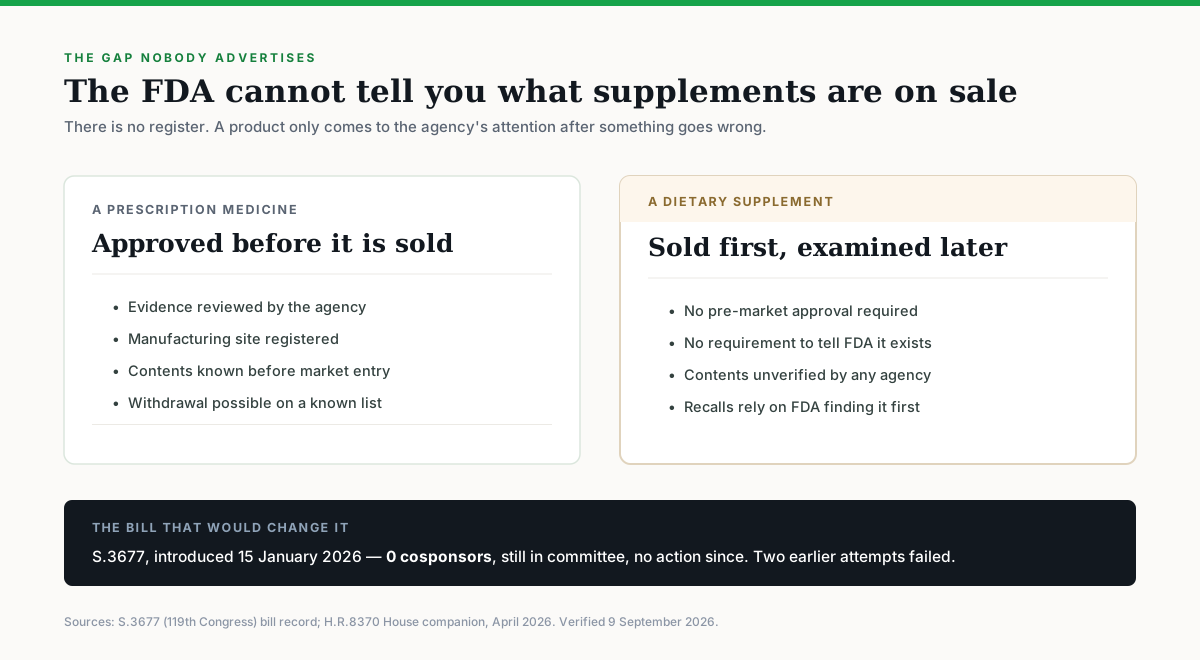
Senator Dick Durbin introduced the Dietary Supplement Listing Act of 2026 on 15 January 2026, which would require manufacturers to tell the Food and Drug Administration what supplements they sell. As of 9 September 2026 the bill, S.3677, has zero cosponsors and has not moved since it was read twice and referred to the Senate Health, Education, Labor and Pensions Committee on the day it was introduced.
A companion bill, H.R.8370, was introduced in the House by Representative Maxine Dexter in April 2026. Durbin pushed versions of the same idea in 2022 and again in 2024. Neither passed.
Most coverage of a bill like this leads with what would change. The more useful story is what has not changed, and what that means the next time you stand in front of a shelf.
What the bill would require
Manufacturers would submit product information to the FDA - labels, the ingredient list, allergen disclosures, and any structure or function claims made on the packaging. For proprietary blends, the ingredient breakdown would go to the agency but be kept confidential rather than published.
Note what that is not. It is not pre-market approval, not safety testing, and not a requirement to prove anything works. It is a register: a list so the FDA knows what exists.
Why a register matters more than it sounds
Right now the agency has no complete list of dietary supplements on the American market. That is not an oversight in enforcement, it is how the law is written. A supplement can be formulated, manufactured, labelled and sold without anyone at the FDA being told it exists.
The practical consequence shows up during recalls. When a product is found to contain an undeclared pharmaceutical - which happens regularly with weight-loss and male-enhancement products - the agency is working backwards from a problem rather than forwards from a list. It cannot check a register it does not have.
Why it keeps failing
Industry trade groups are split, which is the part worth understanding. The Council for Responsible Nutrition has supported mandatory listing. The American Herbal Products Association opposes this version. Some critics argue a register would become a de facto approval list that the agency could use to push products off the market; others say it adds paperwork without adding safety.
Whatever the merits, a bill with no cosponsors eight months after introduction, in a Congress where its sponsor has already tried twice, is not on a path to becoming law this session. Planning your buying around it would be a mistake.
What this means for how you shop
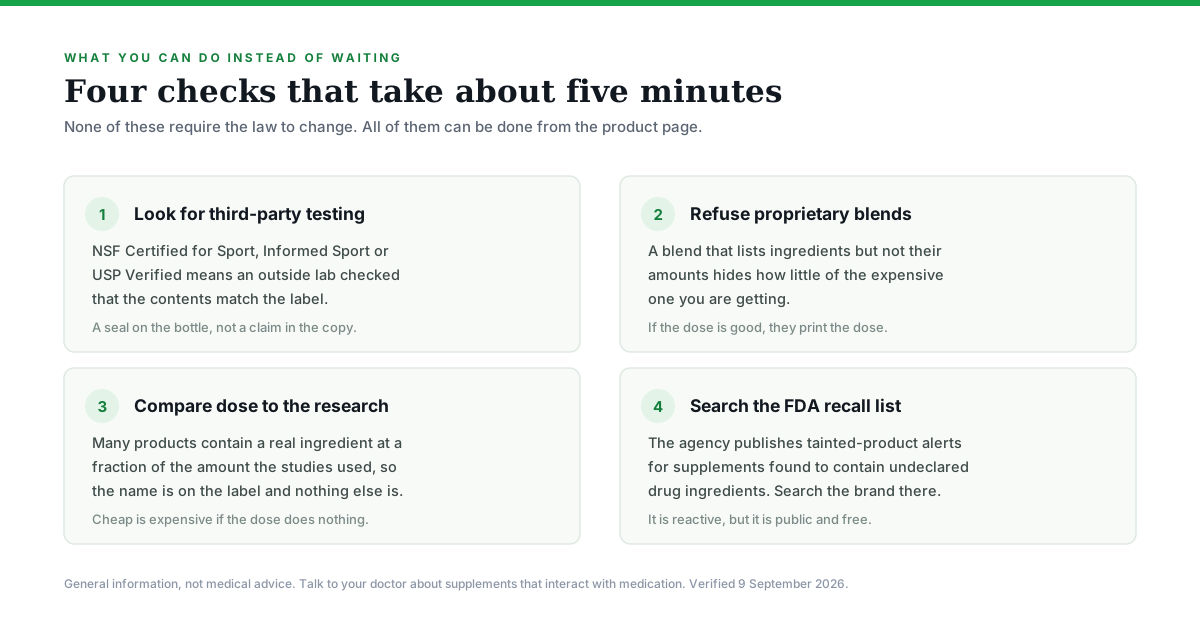
The regulatory floor is not moving, so the checking has to be yours. That is not a counsel of despair - the four checks in the graphic above take about five minutes and eliminate most of the genuinely bad products.
- Third-party testing seals - NSF Certified for Sport, Informed Sport, USP Verified. An outside lab has confirmed the contents match the label. This is the single highest-value check.
- No proprietary blends. A blend that lists ingredients without amounts is hiding the ratio. Products with good doses print their doses.
- Dose against the research. A great many products contain a real, studied ingredient at a fraction of the studied amount.
- Search the brand on the FDA's tainted-products list before a first purchase.
Where we can, our reviews name the certification a product carries - see the creatine and whey protein reviews for what that looks like in practice.
What we could not establish
Whether the bill will get a hearing. Committee scheduling is not public in advance, and absence of action is not proof of a decision. We are reporting the record as it stands, not predicting.
How many supplement products are actually on sale. Estimates circulate widely and vary enormously, which is itself a symptom of the problem - no one has to report, so no one can count. We are not going to quote a figure that nobody can source.
Common questions
Does the FDA approve dietary supplements?
No. Supplements do not go through pre-market approval the way prescription drugs do. Manufacturers are responsible for their own products' safety, and the FDA generally acts after a problem appears.
Has the Dietary Supplement Listing Act passed?
No. S.3677 was introduced on 15 January 2026 and referred to the Senate HELP Committee. As of 9 September 2026 it has no cosponsors and no further recorded action. It has not passed either chamber.
Would the bill mean supplements are tested for safety?
No. It is a listing requirement - manufacturers would report what they sell. It does not add safety testing or efficacy review.
What does third-party tested actually mean?
An independent laboratory, not the manufacturer, checked that the product contains what the label says and is free of specified contaminants. It says nothing about whether the ingredient works, only that it is present in the stated amount.
Sources
- S.3677, Dietary Supplement Listing Act of 2026, 119th Congress - introduced 15 January 2026, referred to the Committee on Health, Education, Labor, and Pensions; 0 cosponsors as recorded
- H.R.8370, House companion bill, introduced April 2026
- Trade association position statements from the Council for Responsible Nutrition and the American Herbal Products Association
This report is general information, not medical advice. We will update it if the bill advances. Last verified 9 September 2026.
Community discussion
Enjoyed this story? Share your thoughts below.