
Here is the strange part: of everything on the supplement shelf, the product I was most afraid of turned out to be the one with the deepest research record. Creatine monohydrate has been studied for decades, in hundreds of trials, across athletes and older adults alike. And I, a 44-year-old woman who reads labels on everything, spent a full year refusing to touch it because of things I had read in comment sections.
Who I am, and why I even care
I am not an athlete. I started strength training at 43 because my doctor mentioned bone density at a checkup and because carrying groceries up the stairs was getting harder than it should have been. Twice a week became three times a week. I got attached to the feeling of adding a little weight to the bar. About six months in, my trainer suggested creatine, almost offhandedly, the way you would suggest someone drink more water. I laughed. Creatine, in my head, lived in giant black tubs next to products with names like aggression in all caps. It was for gym bros. It was not for a 44-year-old mom who trains in the garage before work.
The myths I carried into my doctor's office
My hesitation had three parts, and I want to be honest about all of them because I suspect they are common. First, bloating: the internet told me creatine would make me puffy. Second, kidneys: forum threads were full of vague warnings about kidney damage, usually with no source attached. Third, the word 'bulky,' which I now recognize as marketing residue from decades of fitness culture aimed at women. I had a physical scheduled anyway, so I decided to just ask instead of quietly worrying.
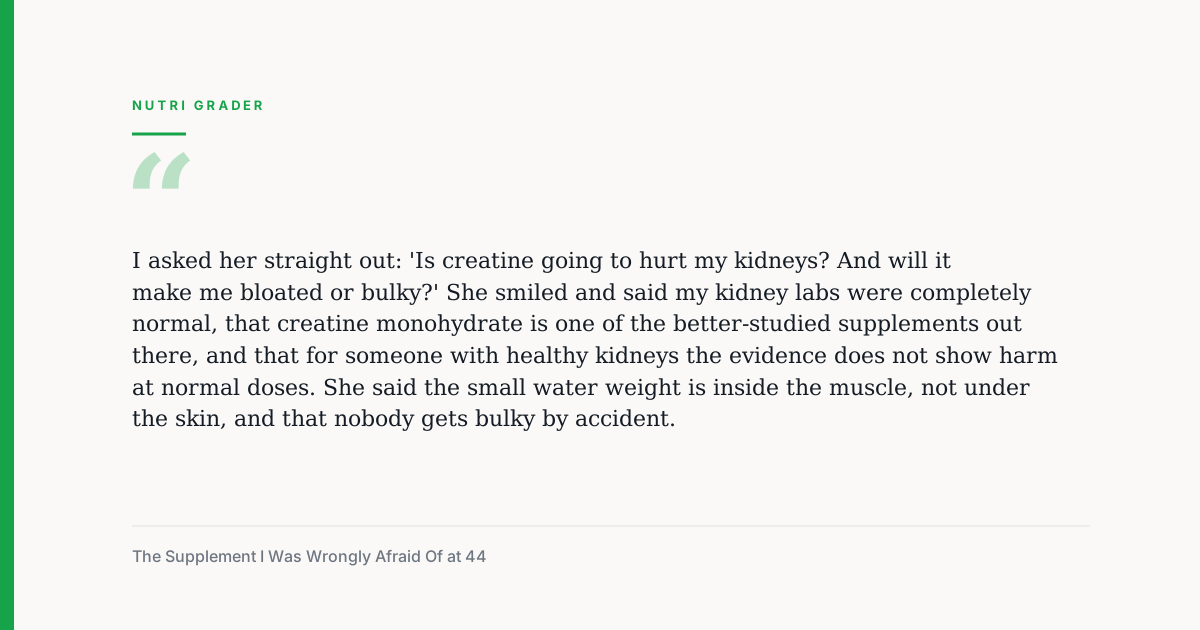
I asked her straight out: 'Is creatine going to hurt my kidneys? And will it make me bloated or bulky?' She smiled and said my kidney labs were completely normal, that creatine monohydrate is one of the better-studied supplements out there, and that for someone with healthy kidneys the evidence does not show harm at normal doses. She said the small water weight is inside the muscle, not under the skin, and that nobody gets bulky by accident.
That conversation took maybe four minutes, and it did more for me than a year of scrolling. I want to flag the obvious lesson: I should have asked a professional first, not last. If you have any kidney condition, or a family history that worries you, that conversation is not optional, it is step one.
What I actually did before buying anything
- Read actual research summaries instead of forum threads, including position-stand style overviews from sports nutrition organizations, so I was reacting to evidence rather than anecdotes.
- Checked that the product I was considering was plain creatine monohydrate with one ingredient on the label, not a proprietary blend padded with extras I did not want.
- Cleared it with my doctor first, because I had family history questions and I wanted my baseline kidney labs on record before starting anything new.
I ended up with Optimum Nutrition's micronized creatine monohydrate. The reasons were boring, which I have come to think is exactly what you want in a supplement: a single ingredient, a widely available product from a large manufacturer, third-party testing, and a cost that works out to pennies per day. No 'matrix,' no 'advanced delivery system,' no flavoring I would get tired of.
Starting simple: 5 grams in my coffee
I skipped the loading phase entirely. Some protocols front-load 20 grams a day for a week to saturate muscles faster, and the research suggests that works, but it is also the approach most associated with the stomach discomfort people complain about. Taking 3 to 5 grams daily gets you to the same place in three or four weeks, just more gradually. So my routine became: 5 grams stirred into my morning coffee. It is micronized, so it dissolves reasonably well, and it is tasteless. The whole ritual takes ten seconds, which matters, because the only supplement that does anything is the one you actually take every day.
What changed over the months, honestly
Nothing dramatic happened, and I want to say that clearly because supplement stories usually promise transformation. What I noticed was quieter. Around week four or five, sets that used to end at eight reps started ending at nine. An extra rep here and there does not sound like much, but strength training is compound interest: a little more work each session, accumulated over months, is the entire mechanism. Recovery felt shorter too. The two-day soreness after heavy leg days shrank to something closer to one day, which meant I trained more consistently, which fed back into the same loop. Whether every bit of that was creatine or just a year of consistent training, I cannot cleanly separate, and neither can anyone else telling you their story.
The scale did tick up, about two pounds over the first month. This is the bloating myth, seen clearly: creatine pulls water into muscle cells. It is expected, it is not fat, it is not the puffy under-the-skin feeling I had braced for, and it settled quickly. My clothes fit the same. If anything, they fit better.
The honest fine print
Creatine is not magic, and I would be doing you a disservice to imply otherwise. My progress came from training; creatine was, at best, a small multiplier on work I was already doing. Some people are non-responders and notice nothing at all, often because their diet already provides plenty. You should drink enough water, since your muscles are holding more of it. Buy a third-party tested product so you are getting what the label claims. And I will say it one more time because it matters: anyone with a kidney condition, or on medications that affect the kidneys, needs the doctor conversation before the first scoop, not after.
Where I landed
A year ago I was afraid of a white powder with a longer safety record than most things in my medicine cabinet, based on posts written by strangers. What changed my mind was not marketing. It was a calm doctor, a stack of research summaries, and a boring single-ingredient label. At 44, I am stronger than I was at 34, and creatine played a small, honest part in that. The fear, it turned out, was the only thing that never had evidence behind it.
Disclosure: this post reflects one person's experience and includes links to our independent review; Nutri Grader may earn a commission if you buy through links on this site, at no cost to you. Nothing here is medical advice. Supplements affect people differently, and decisions about creatine, especially with any kidney condition or family history concerns, belong in a conversation with your doctor or pharmacist. - Rachel
Community discussion
Enjoyed this story? Share your thoughts below.